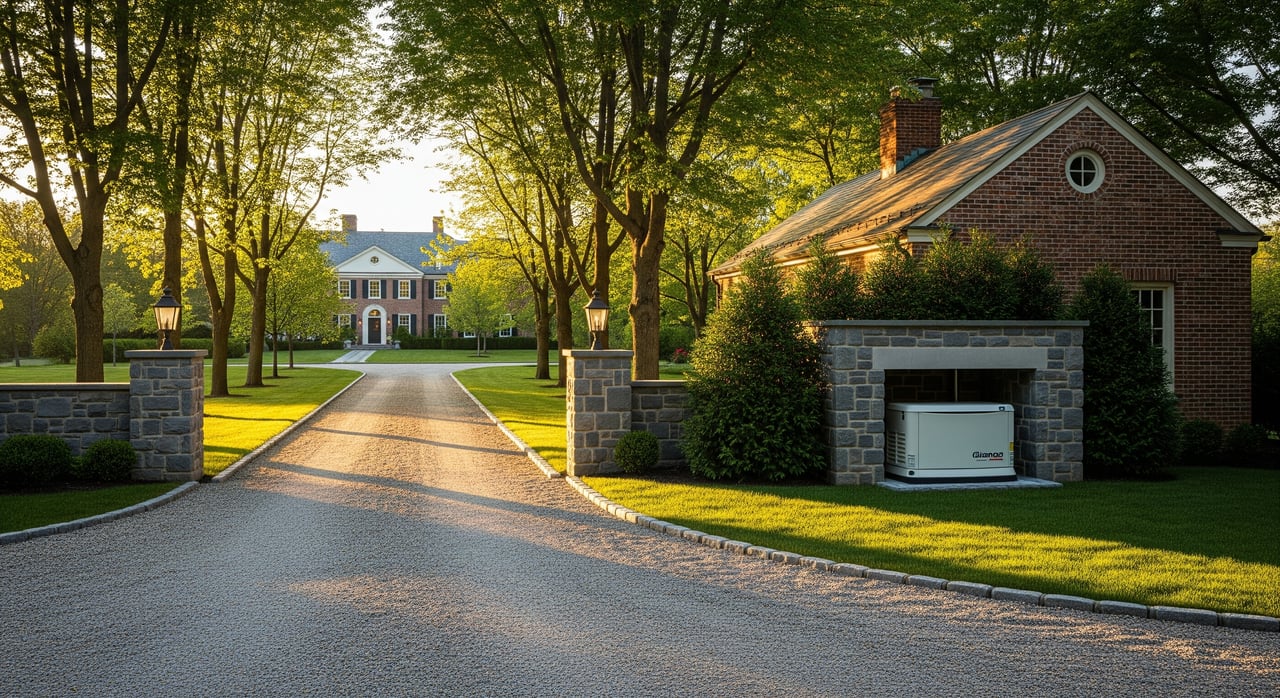
Power outages in Harding Township tend to show up when it’s least convenient. If your home sits at the end of a long driveway or on a larger estate lot, a standby generator can be the difference between a minor disruption and a major headache. You want reliable backup power without surprises, and you also want a plan that fits your property’s access, aesthetics, and code requirements.
This guide walks you through how to choose the right capacity, fuel, and location for your generator, plus the logistics that come with private roads and long driveways. You’ll also get a practical checklist and next steps tailored to Harding Township. Let’s dive in.
Essential vs. whole‑estate power
Decide early what you want your generator to cover. Your choice drives size, fuel, siting, and budget.
- Essential circuits only. Think refrigeration, sump or well pumps, heating controls, a few lighting circuits, security systems, and possibly one or two HVAC zones. This keeps the unit smaller and reduces fuel use.
- Whole‑house or whole‑estate power. Includes all HVAC, electric heating, water treatment, outbuildings, barns or workshops, gate operators, and more. This often requires a much larger unit and more robust fuel storage.
Plan for the typical outage durations you experience. Short, occasional outages may point to natural gas if available. If you want autonomy for multi‑day storms, prioritize on‑site fuel storage and delivery access.
How to size your generator
Proper sizing is about more than adding up appliance labels. Motors like HVAC compressors and pumps draw higher starting current than running current. That surge matters.
- Inventory every load. List HVAC units with tonnage and type, well and sewage pumps, kitchen equipment, water heaters, security/IT gear, EV chargers, and workshop or barn equipment.
- Flag motor‑starting loads. Use manufacturers’ starting kW or locked‑rotor amps for compressors and pumps so the generator can handle inrush.
- Use load management. Automatic load shedding or staggering HVAC and water heaters can reduce the required generator size.
- Build a margin. Final sizing should account for continuous load best practices. A licensed electrician or electrical engineer should confirm kW/kVA, service entrance needs, and automatic transfer switch (ATS) rating in line with recognized standards.
For large estate homes with multiple HVAC systems or electric heating, capacity can extend into the higher kW ranges. Confirm final sizing with your electrical professional and the generator manufacturer’s data.
Fuel choices for Harding Township estates
Each fuel has tradeoffs. Your access, autonomy goals, and service plan will guide the pick.
- Natural gas (NG). Convenient and clean, with no on‑site storage. Useful if outage durations are short and utility mains are reliable for your street. Very large units may need a higher‑capacity feed.
- Propane (LPG). Common for rural and estate settings without gas mains. Offers long on‑site storage in above‑ or below‑ground tanks. Delivery access and safe siting are essential, and cold weather can affect vaporization.
- Diesel. Strong for larger whole‑estate systems. Diesel engines are efficient at scale and pair well with bulk storage for long outages. Plan for fuel conditioning, spill prevention, and winterization.
- Hybrid with batteries. Battery plus inverter can cover short outages quietly or bridge the gap while the generator starts. For long, whole‑house coverage, batteries typically need to be paired with a generator.
If your goal is multi‑day autonomy in a semi‑rural area, propane or diesel with properly sized storage can offer peace of mind. If convenience and shorter outages are the expectation, natural gas is attractive.
Storage and delivery on long driveways
Long or steep private drives can be the hardest part of your plan. Fuel suppliers will assess access before approving deliveries.
- Tank sizing and runtime. Match tank capacity to your generator’s fuel consumption at expected loads and your autonomy goal, whether 3, 7, or 14 days. Use manufacturer consumption charts.
- Truck access and turnaround. Delivery trucks need turning radius, load‑bearing surfaces, and a level staging area near tanks. If access is tight, explore a hammerhead turnaround or confirm smaller‑vehicle delivery options.
- Cold weather readiness. Diesel can gel without treatment and degrades over time; propane vaporization drops in extreme cold. Consider winterized fuel, tank heating, or dual‑tank strategies.
- Redundancy and contracts. Dual tanks or priority delivery agreements can help during storms. Confirm minimum intervals and emergency response times in your supplier contract.
Siting and installation on large parcels
Placement affects performance, cost, and neighbor relations.
- Near the service entrance. Shorter conductor runs reduce cost and voltage drop. If the service location is far from your ideal generator site, compare trenching costs versus relocating the unit.
- Clearances and ventilation. Follow manufacturer and recognized safety standards for distances from openings, property lines, and eaves. Exhaust should not vent near windows, air intakes, or outdoor living spaces.
- Flood and resilience. Avoid siting equipment in flood hazard areas. If you must, plan elevation, floodproofing, and compliant fuel and electrical components.
- Noise and aesthetics. Large units can be loud. Use sound‑attenuating enclosures, strategic placement, and acoustic screening. Confirm any municipal noise rules before finalizing.
- Security and serviceability. Use lockable enclosures and anti‑tamper hardware. Landscaping should screen without blocking airflow or maintenance access.
Driveways, gates, and private‑road details
On estate lots, access is part of the engineering.
- Turning radius and staging. Provide a safe area for delivery trucks and service vehicles to stop and turn without blocking drive lanes.
- Weight limits and crossings. Check that your driveway base, bridges, or culverts can handle tanker weights. Reinforcement or alternate delivery methods may be needed.
- Grade and traction. Steep, icy driveways slow or stop deliveries. Improve surfacing, plan plowing, and address winter traction.
- Gates and codes. Share gate codes or keys with installers and suppliers. Ensure manual opening is possible during outages.
- Easements and access rights. If deliveries cross another parcel, document access rights and emergency plans before installation.
Permits, codes, and insurance in Harding Township
Get your approvals lined up early to avoid delays.
- Local permits and inspections. Coordinate with Harding Township Building Department and Fire Prevention for permits and inspections. Provide equipment specs, site plans, tank details, and electrical drawings to speed review.
- Standards to follow. Recognized safety and electrical standards will guide siting, wiring, and clearances, including those covering stationary engines, transfer equipment, and performance testing.
- Flood maps and siting. If your parcel is in a mapped flood area, additional elevation or floodproofing will apply.
- Insurance and environmental rules. Notify your homeowner’s insurer before you install. Aboveground fuel storage can trigger spill‑prevention and containment requirements. Confirm state and local fuel‑storage rules.
Maintenance, testing, and remote monitoring
A generator is only as good as its upkeep.
- Preventive maintenance. Follow the manufacturer’s schedule for oil and filter changes, battery checks, and inspections. Estate systems often use annual or semi‑annual service contracts.
- Exercise cycles and load tests. Many systems run weekly for 10 to 30 minutes. Communicate the schedule, since larger units can be noisy during tests.
- Remote monitoring. Consider cellular or internet monitoring to alert you to faults during storms. If your internet can go down in weather, plan a communications backup.
- Fuel agreements. Secure priority service with your supplier for storm periods and set clear delivery intervals. Add winterization provisions for diesel where needed.
A practical planning checklist
Use this checklist to bring your plan together and reduce surprises:
- Define your outage goals: essential circuits or whole‑estate, and target runtime in days.
- Complete a load inventory with nameplate ratings and motor‑starting data.
- Survey your site: fuel‑main proximity, driveway access, turning radius, gradient, and staging area.
- Choose a fuel strategy: natural gas, propane, diesel, or hybrid. Estimate tank size and confirm supplier access.
- Run a regulatory check: contact Harding Township building and fire officials; review state code; check FEMA flood maps for your parcel.
- Map the electrical design: ATS location, conductor routing, grounding and bonding, and load‑shedding strategy.
- Plan noise and aesthetics: enclosure type, placement, and landscaping that preserves clearances.
- Line up maintenance: service contract, remote monitoring, and emergency contacts.
- Address insurance and contracts: notify your insurer; secure priority fuel delivery terms.
- Build your budget and schedule: obtain line‑item proposals for equipment, pad, trenching, installation, screening, and maintenance. Aim to complete before winter if access is challenging.
When to involve your real estate advisor
If you plan to sell in the near future, generator decisions can affect marketability, inspection outcomes, and perceived value. A thoughtful plan that fits Harding Township’s semi‑rural setting can reassure buyers about resilience, especially on larger parcels with private roads. You can also leverage local vendor networks to handle site access improvements, screening, and code approvals.
If you are weighing pre‑sale investments, a real estate advisor with a construction‑concierge approach can help you prioritize, gather competitive bids, and time the installation with your listing timeline.
Ready to talk through generator planning in the context of your sale or purchase, or to align upgrades with your timeline? Request a personalized home valuation from Unknown Company.
FAQs
How do I decide between essential circuits and whole‑estate power?
- Start with your outage goals and budget, list all loads, and identify what must run during an outage; larger estates with multiple HVAC systems often benefit from load management to keep size and cost in check.
What fuel is best for Harding Township’s large lots?
- Natural gas is convenient where available and outages are short; propane or diesel with on‑site storage provides better autonomy for longer outages common on semi‑rural properties.
Can delivery trucks reach my propane or diesel tank on a long driveway?
- It depends on turning radius, surface strength, grade, and clearance; fuel suppliers will survey access and may require a turnaround or smaller vehicle deliveries.
Where should I place the generator on a large parcel?
- Choose a location near the service entrance for shorter runs, with proper clearances and ventilation, away from flood risk and outdoor living areas, and accessible year‑round for service and deliveries.
What permits do I need in Harding Township for a standby generator?
- Coordinate with the Harding Township Building Department and Fire Prevention for electrical, mechanical, and fuel storage permits; provide manufacturer specs, site plans, and tank details for review.
How noisy are larger estate generators during testing?
- Larger units can be noticeable during weekly exercise and annual load tests; use sound‑attenuating enclosures, thoughtful siting, and neighbor notifications to minimize impact.